
ສະໄໝໜຶ່ງ ພະຜູ້ມີພະພາກເຈົ້າປະທັບຢູ່ວັດເວລຸວັນ ເມືອງຣາຊະຄຶ. ຄັ້ງນັ້ນ ພະພຸດທະເຈົ້າສະເດັດອອກບິນທະບາດ ເຫັນ ສິງຄາລະກະ ປະນົມມືໄຫວ້ທິດທັງຫຼາຍ ຄືທິດເບື້ອງໜ້າ ທິດເບື້ອງຂວາ ທິດເບື້ອງຫຼັງ ທິດເບື້ອງຊ້າຍ ທິດເບື້ອງລ່າງ ແລະທິດເບື້ອງເທິງ. ພະພຸດທະອົງຈຶ່ງຕັດຖາມວ່າ ທ່ານລຸກຂຶ້ນແຕ່ເຊົ້າ ອອກຈາກນະຄອນຣາຊະຄຶ ໄຫວ້ທິດທັງຫຼາຍເພາະເຫດອັນໃດນໍ? ສິງຄາລະກະທູນວ່າ ພໍ່ຂອງຂະນ້ອຍສັ່ງໄວ້ໃຫ້ນອບນ້ອມທິດທັງຫຼາຍ ພະພຸດທະອົງຈຶ່ງຕັດເທດສະໜາເລື່ອງທິດທັງ ໖ ແກ່ສິງຄາລະກະ. ພະອະຣິຍະສາວົກລະກຳມະກິເລດທັງ ໔ ໄດ້ແລ້ວ, ບໍ່ເຮັດບາບໂດຍຖານະ ໔ ແລະບໍ່ເສບທາງເສື່ອມແຫ່ງໂພຄະ ໖, ພະອະຣິຍະສາວົກນັ້ນເປັນຜູ້ປາສະຈາກກໍາອັນລາມົກ ໑໔ ຢ່າງແລ້ວຍ່ອມເປັນຜູ້ປິດທິດທັງ ໖. ນອກນີ້ ພະພຸດທະອົງຍັງອະທິບາຍຂໍ້ທໍາອື່ນໆ ເຊັ່ນ ທໍາຂອງຜູ້ຄອງເຮືອນ. ເມື່ອຈົບພະທໍາມະເທດສະໜາສິງຄະລະກະກໍ່ເກີດສັດທາ ແລະໄດ້ສະແດງຕົນເປັນອຸບາສົກຜູ້ເຖິງພ້ອມພະຣັດຕະນະໄຕ.
On one occasion, the Buddha was living at the Veluvana monastery in Rajagaha. At the time, the Buddha went on alms round. On the way, he saw Singalaka was paying respect towards the six directions: that is east, south, west, north, lower and upper.Seeing this, the Buddha said to him: "Young man, why have you risen in the early morning and set out from Rajagaha to worship in such a way? Singalaka replied, my father urged me to worship the directions. The Buddha then explained him the six directions. A noble disciple gives up four corrupt deeds, doesn’t do bad deeds on four grounds, and avoids six drains on wealth. When they have left these fourteen bad things behind they have the six directions covered. Moreover, the Buddha explained him other virtues such as the virtues for a good household life. At the end of the discourse, Singalaka became faithful and presented himself as a lay Buddhist who goes for refuge to the Triple Gem.
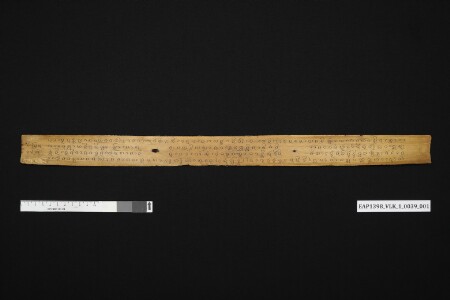
Extent: 1 palm-leaf manuscript containing 31 leaves.
Size and dimensions of original material: Hight 5 cm, width 53.7 cm, depth 1.4 cm.
Condition of original material: Good.
Author(s)/Creator(s): Unidentified.
Scribe(s): Unidentified.
Original institution reference: Manuscript Cabinet No.1.