
ສອງເຫວດສັນຕະຣະ ໝາຍເຖິງ ອານິສົງທີ່ໄດ້ຮັບຈາກການເຄົາລົບບູຊາແລະຟັງເທສະໜາເລື່ອງເຫວດສັນຕະຣະຊາດົກ. ພະພຸດທະເຈົ້າໄດ້ຕັດເທສະໜາເລື່ອງອານິສົງເຫວດສັນຕະຣະຊາດົກແກ່ເຈົ້າພິກຂຸແລະທ້າວພະຍາສັກກາຍະຣາດທັງຫຼາຍວ່າ ຄົນທັງຫຼາຍຝູງໃດໃຄ່ເຫັນພະອະຣິຍະເມດໄຕຕົນປະເສີດນັ້ນ ໃຫ້ສະດັບຮັບຟັງຍັງເຫວດສັນຕະຣະຊາດົກໃຫ້ແລ້ວມື້ໜຶ່ງວັນດຽວ ຄໍາປາດຖະໜາຂອງຄົນຝູງນັ້ນກໍ່ຈະສໍາເລັດ. ດ້ວຍອານິສົງການຟັງເຫວດສັນຕະຣະຊາດົກ ເມື່ອຄົນທັງຫຼາຍຕາຍໄປ ກໍ່ຈະໄດ້ໄປເກີດໃນສະຫວັນ, ຈະບໍ່ໄປຕົກນະຮົກ, ຈະໄດ້ເກີດຮ່ວມສາສະໜາຂອງພະສີອະຣິເມດໄຕຕົນຈັກມາພາຍໜ້າ ແລະຈະເປັນປັດໄຈໃຫ້ບັນລຸທໍາແລະເຂົ້າສູ່ພະນິບພານ. ຄໍາລົງທ້າຍ: ລານທີ ໑໑ ໜ້າ ໑: ສັງກາດໄດ້ ໑໒໕໗ ຕົວ ປີຮວາຍສັນ ເດືອນ ໑໒ ຂຶ້ນ ໗ ຄໍ່າ ພໍ່າວ່າໄດ້ ວັນ ໖ ມື້ຮ້ວງໃສ້ ຣິດຈະນາແລ້ວຍາມກອງງາຍ ໝາຍມີ ຈົວອ່ອນ ເປັນເຄົ້າເປັນເຫງົ້າ ມູນລະສັດທາກັບທັງບຸດຕະນັດຕາພັນທຸວົງສາ ພ້ອມກັນມີໃຈໃສສັດທາເປັນອັນຍິ່ງ ຈຶ່ງສ້າງຍັງ ສອງມະຫາເວດສັນຕະຣະ ໄວ້ກັບສາສະໜາ ພະໂຄຕະມະເຈົ້າ ຕາບຕໍ່ເທົ້າ ໕໐໐໐ ພັນວັດສາ ນິບພານະ ປັດຈະໂຍ ໂຫຕຸ ໂນ ທຸວັງ ທຸວັງ.
Sòng Vessantara means the merit gained by worshiping and listening to the preaching of Vessantara Jataka. The Buddha preached a serom about the merit of the Vessantara Jataka to his disciples and Sakya princes. The Buddha said that thos who wish to meet Ariya Metteyya are advised to listen to the preaching of Vessantara Jataka and to accomplish the listening within one day. Their wish will come true. Due to the results of the listening to the preaching of Vessantara Jataka, after death, they will be reborn in heavens, not going to hells, reborn in the period of the coming Buddha, Ariya Mettaya, and attain enlightenment and enter Nirvana. Colophon: Folio 11 on the recto side: In Sangkat (CS) 1257, a hwai san year, on the seventh day of the waxing moon of the twelfth lunar month, the sixth day of the week (Friday), a hap sai day, the writing was accomplished at the time of kòng ngai (between 7.30–9.00 o’clock). The initiator, Novice Òn along with his children, grandchildren and relatives had the ardent religious faith to sponsor the making of this manuscript [entitled] Sòng Maha Vessantara to support the Teachings of Gotama Buddha to last until the end of 5000 years. Nibbāna paccayo hotu no dhuvaṃ dhuvaṃ (May this be a condition for us to reach Nibbāna, certainly and certainly).
Extent: 1 palm-leaf manuscript containing 11 leaves.
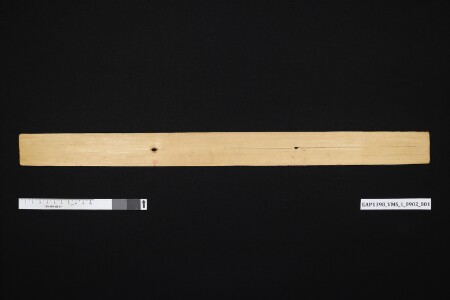
Size and dimensions of original material: Hight 5 cm, width 59 cm, depth 0.5 cm.
Condition of original material: Fragile.
Alternative calendar and date: Lao, CS 1257, a hwai san year
Scribe(s): Unidentified.
Original institution reference: Manuscript Cabinet No.1.