
ພະວິພັງ ຄາຖາທີ່ ໒ ໃນ ໗ ຄໍາພີແຫ່ງພະອະພິທໍາ ເປັນການຍົກໝວດທໍາສໍາຄັນໆ ຂຶ້ນຕັ້ງເປັນຫົວເລື່ອງແລ້ວແຍກແຍະອອກ, ອະທິບາຍແລະວິນິດໄສຢ່າງລະອຽດ ເຊິ່ງເນື້ອຄວາມບາງສ່ວນເປັນບົດພາສາບາລີແລະບາງສ່ວນແປເປັນພາສາລາວ ແລະວ່າດ້ວຍ ຂັນ ໕ ທັງຫລາຍຄື: ໑. ຮູບຂັນ ຄື ກອງຮູບສ່ວນທີ່ເປັນຮ່າງກາຍແລະສ່ວນປະກອບທີ່ເປັນຮູບທໍາທັງໝົດ, ໒. ເວທະນາຂັນ ຄື ກອງເວທະນາ ໃນສ່ວນທີ່ເປັນການສະເຫວີຍອາລົມ, ຄວາມຮູ້ສຶກ ສຸກ ທຸກ ຫຼືເສີຍໆ ໓. ສັນຍາຂັນ ຄື ກອງສັນຍາ ສ່ວນທີ່ເປັນການໝາຍຮູ້ແລະຈົດຈໍາສິ່ງທີ່ໄດ້ຮັບ, ໔. ສັງຂານຂັນຄື ກອງສັງຂານ ສ່ວນທີ່ເປັນຄວາມປຸງແຕ່ງ, ສະພາບທີ່ປຸງແຕ່ງຈິດໃຫ້ດີຫຼືຊົ່ວຫຼືເປັນກາງ. ໕. ວິນຍານຂັນ ຄື ກອງວິນຍານ ສ່ວນທີ່ເປັນຄວາມຮູ້ແຈ້ງອາລົມຜ່ານທາງອາຍະຕະນະທັງ 6 ເຊັ່ນ ການເຫັນ, ການໄດ້ຍິນ ເປັນຕົ້ນ. ຄໍາລົງທ້າຍ: ລານທີ ໒໙ ໜ້າ ໑: ຈຸນລະສັງກາດ ໑໒໕໒ ຕົວ ປີກົດຍີ່ ເດືອນ ສິບ (໑໐) ແຮມ ໖ ຄໍ່າ ພໍ່າວ່າໄດ້ວັນ ໗ ມື້ເປິກສະງ້າ ຣິດຈະນາແລ້ວຍາມກອງງາຍເຂົ້າຫາທ່ຽງ ໝາຍມີ ເຈົ້າຢໍາຂະໝ່ອມອົງເປັນພະຣາຊະບຸດຕາສົມເດັດພະເປັນເຈົ້າ ບໍຣົມມະເສດຖາ ຂັດຕິຍະ ສຸລິຍະ ພະຣາຊະວົງສາ ກົມພະຣາຊະວັງບໍວໍຣະສະຖານມຸງຄຸນນະຣະທິບັດຕິ ສີສຸວັນນະຫໍຄໍາຝ່າຍຫລັງ ເປັນເຄົ້າເປັນເຫງົ້າກວ່າມູນລະສັດທາ ກັບທັງຣາຊະກັນຍາແລະ ຣາຊະບຸດຕາ ຣາຊະບຸດຕີແລະ ຣາຊະນັດຕາ ຣາຊະວົງສາໝູ່ພີ່ນ້ອງເຊື້ອຊາດຫ້ອງພັນທຸຣາ ຣໍາເພິງຫາຍັງຄຸນພະແກ້ວ ອັນເປັນໂກຖາກແລ້ວແຫ່ງມະຫັນຕະໂກສົນອັນລໍ້າຍິ່ງ ຈິ່ງໄດ້ມີພະຣາຊະສັດທາ ພິຣົມມະຊາໃສໃນພະຣາຊະຫືຣະໄທ ເຫລື້ອມໃສໃນວໍລະພະພຸດທະສາສະໜາເປັນອັນຍິ່ງຈິ່ງໄດ້ສ້າງຍັງລໍາ ພະວິພັງຄະທາຕຸ ນີ້ໄວ້ກັບໂຊຕະນະ ພະພຸດທະໂຄດົມບຸຣົມມະຄູເຈົ້າ ຕາບຕໍ່ເທົ້າ ໕໐໐໐ ວັດສາ. ນິບພານະ ປັດຈະໂຍ ໂຫຕຸ ສາທຸ ສາທຸ ສຸດທິນັງ ວັດຕະ ເມ ທານັງ ປະຣິສຸດທັງ ນິບພານັງ ປະຣະມັງ ສຸກຂັງ ນິດຈັງ ທຸວັງ ທຸວັງ.
Abhidhamma text, Vibhanga, the second Khatha of the seven books. It is to raise the important categories of Dhamma topics and set them up as subjects and then distinguish them, explain and diagnose in detail. Some of the content is written in Pali and some in Lao tells about the five aggregates as following: 1. Rūpa-khandha: Corporeality includes body and the whole components 2. Vedanā-khandha: Feeling, that is the enjoyment of emotions, the feeling of happiness, suffering, or indifference. 3. Saññā-khandha: Perception, the part that defines the meaning to remember the emotion. 4. Saṅkhāra-khandha: Mental formations, the part that is the refining, the state that alters the mind for good or evil or being middle. 5. Viññāṇa-khandha: Consciousness, the part that is the understanding of emotions throughout the six senses such as seeing, hearing, etc. Colophon: Folio 29 on the recto side: Chunlasangkat (CS) 1252, a kot nyi year, on the sixth day of the waning moon of the tenth lunar month, the seventh day of the week (Saturday), the writing was accomplished at the time of kòng ngai (between 7.30–9.00 o’clock). The royal son of the royal king, who lived in the golden palace on the back side, is the initiator along with his wife, children, grandchildren and all relatives thought of the virtues of the Triple Gem which is the field of merit, had the most ardent religious faith in the Buddha’s Teachings and kindness to sponsor the making of the Buddhist scripture [entitled] Pha Viphangkhathatu (Dhātu-vibhaṅga) to support the Teachings of the Lord Buddha to last until the end of 5000 years. Nibbāna paccayo hontu (May this be a condition to reach Nibbāna). Sadhu sadhu (Amen, amen!). Sudinnaṃ vatta me dānaṃ parisuddhaṃ nibbānaṃ paranaṃ sukhaṃ niccaṃ dhuvaṃ dhuvaṃ (May the alms that I have already given is pure be a condition to reach Nibbāna which is the greatest bliss constantly and certainly).
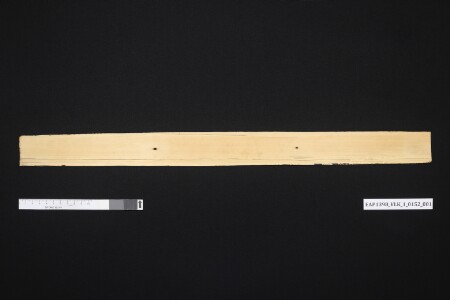
Extent: 1 palm-leaf manuscript containing 29 leaves.
Size and dimensions of original material: Hight 4.8 cm, width 58.2 cm, depth 1.1 cm.
Condition of original material: Fragile.
Alternative calendar and date: Lao, CS 1252, a kot nyi year
Scribe(s): Unidentified.
Original institution reference: Manuscript Cabinet No.1.