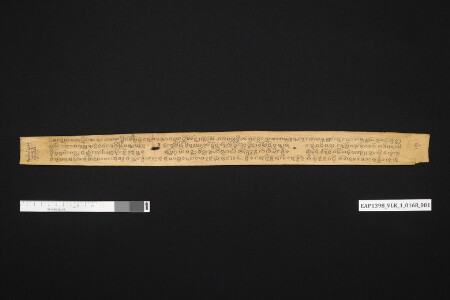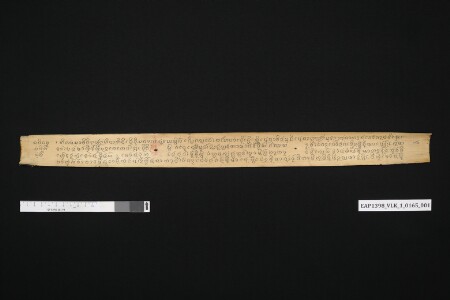

ອະພິທໍາມະສັງຄິນີ ຄາຖາທີ່ ໑ ໃນ ໗ ຄໍາພີ ເປັນການລວບລວມຫົວຂໍ້ທໍາເຂົ້າເປັນໝວດໝູ່ແລ້ວອະທິບາຍແຕ່ລະປະເພດຢ່າງລະອຽດ ໂດຍເນື້ອຄວາມບາງສ່ວນເປັນບົດພາສາບາລີແລະບາງສ່ວນແປເປັນພາສາລາວ ແລະວ່າດ້ວຍຈິດທັງຫລາຍທີ່ເປັນກຸສົນແລະອະກຸສົນ ແບ່ງອອກເປັນ ໔ ໝວດຄື: ໑. ຈິດຕະວິພັດຕິກັນ ວ່າດ້ວຍເລື່ອງຈິດທັງໝົດ, ໒. ຣູປະວິພັດຕິກັນ ວ່າດ້ວຍເລື່ອງຂອງຮູບທັງໝົດ, ໓. ນິກເຂປະກັນ ວ່າດ້ວຍເລື່ອງສະພາວະທໍາທັງໝົດ, ໔. ອັດຖຸທາຣະກັນ ຫຼື ອັດຖະກະຖາກັນ ວ່າດ້ວຍການອະທິບາຍຈິດແລະເຈຕະສິກ. ຄໍາລົງທ້າຍ: ລານທີ ໒໖ ໜ້າ ໑: ຈຸນລະສັງກາດຣາຊະ ໑໒໓໙ ຕົວ ປີເມິ່ງເປົ້າ ເດືອນ ໑໐ ຂຶ້ນ ໑໓ ຄໍ່າ ວັນ ໕ ມື້ຮວາຍສັນ ຣິກຂິດຕະແລ້ວຍາມຕູດຊ້າຍກາງວັນ ປະຖະມະມູນລະສັດທາ […] ຄໍາຜີວເປັນເຄົ້າເຫງົ້າສັດທາໄດ້ ສ້າງຍັງພະກໍາພີ ອະພິທໍາມາ ໗ ກໍາພີ ນີ້ໄວ້ກັບສາສະໜາ ຕາບຕໍ່ເທົ້າ ໕ ພັນພະວັດສາ ນິບພານັງ ປະຣະມັງ ສຸກຂັງ ນິດຈັງ ທຸວັງ.
Abhidhamma text, Dhammasangani, the first Khatha of the seven books. It is a collection of Dhamma topics into categories and explains each category in detail. Some of the content is written in Pali and some in Lao tells about the whole mind that is wholesome and unwholesome, divided into 4 categories as following: 1. Cittavibattikanda: The whole mind 2. Rūpavibattikanda: The whole corporeality 3. Nikkhepakanda: The states of the Dhamma 4. Atthūdārakanda or Atthakathakanda: The explanation of consciousness and mental factors. Colophon: Folio 26 on the recto side: Chunlasangkat (CS) 1239, a moeng pao year, on the thirteenth day of the waxing moon of the tenth lunar month, the fifth day of the week (Thursday), a hwai san day, the writing was accomplished at the time of tut sai kang van (between 12.00–13.30 o’clock). The initiator, Khamphio sponsored the making of this manuscript [entitled] Aphithamma 7 khamphi (The seven books of Abhidhamma) to support the Teachings of the Buddha to last until the end of 5000 years. Nibbāna paramaṃ sukhaṃ niccaṃ dhuvaṃ (Nibbāna is the greatest bliss, constantly and certainly).
Extent: 1 palm-leaf manuscript containing 28 leaves.
Size and dimensions of original material: Hight 4.5 cm, width 55.8 cm, depth 1 cm.
Condition of original material: Fragile.
Alternative calendar and date: Lao, CS 1239, a moeng pao year
Scribe(s): Unidentified.
Original institution reference: Manuscript Cabinet No.1.