
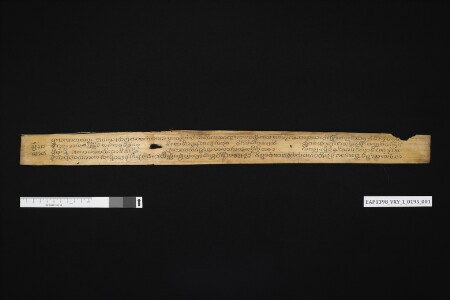
ສະໄໝພຸດທະການ ໃນເມືອງໂກສໍາພີຍັງມີຊາຍທຸກໄຮ້ເຂັນໃຈຜູ້ໜຶ່ງ ປະກອບອາຊີບຂາຍຫຍ້າແລະໃບຕອງ. ວັນໜຶ່ງ ຊາຍຜູ້ນັ້ນ ກໍ່ໄດ້ເຂົ້າໄປໃນປ່າເພື່ອເອົາໃບຕອງແລະຫຍ້າ ໄດ້ເຫັນສາລາຫຼັງໜຶ່ງທີ່ຕັ້ງຢູ່ແຄມທາງ ຈຶ່ງເກີດຄິດວ່າ ທີ່ຕົນທຸກຍາກ ກໍ່ຍ້ອນວ່າບໍ່ໄດ້ເຮັດບຸນໃຫ້ທານ ບໍ່ໄດ້ຮັກສາສີນ ຟັງທໍາ ເມື່ອຄິດໄດ້ແນວນັ້ນແລ້ວ ຈຶ່ງກັບໄປເຮືອນແລ້ວຊັກຊວນພັນລະຍາສ້າງສາລາ. ພັນລະຍາກໍ່ເຫັນດີ ແຕ່ບໍ່ມີເງິນ ຈຶ່ງໄດ້ເອົາລູກຊາຍໄປຂາຍໃຫ້ເສດຖີໄດ້ເງິນ ໕໐໐ ກະຫະປັນນະແລ້ວມາສ້າງສາລາ ແລະຂຸດບໍ່ນໍ້າ ເມື່ອສ້າງສໍາເລັດແລ້ວ ຈຶ່ງຖວາຍໃຫ້ເປັນທານແກ່ພະພິກຂຸສົງ. ດ້ວຍຜະລະອານິສົງດັ່ງກ່າວ ຄັນເມື່ອຊາຍຜູ້ນັ້ນພ້ອມດ້ວຍພັນລະຍາແລະລູກຊາຍໄດ້ຈຸຕິຕາຍໄປກໍ່ໄດ້ໄປເກີດເປັນເທວະບຸດສະເຫວີຍທິບພະສົມບັດຢູ່ເທິງສະຫວັນ ອັນມີວິມານຄໍາ ສູງໄດ້ ໑໒ ໂຫຍດ ແລະແວດລ້ອມດ້ວຍນາງຟ້າເປັນບໍລິວານ. ຄໍາລົງທ້າຍ: ລານທີ ໗ ໜ້າ ໑: ພຸດທະສັງກາດ ໒໔໗໐ ຕົວ ປີກາເໝົ້າ ເດືອນ ໗ ຂຶ້ນ ໖ ຄໍ່າ ວັນ ໒ ຣິດຈະນາແລ້ວຍາມກອງງາຍ ໝາຍມີ ເຈົ້າໝ່ອມອອ່ນສີ ເປັນສັດທາໃບລານ ເຈົ້າພັນເປັນຜູ້ຂຽນ ສອງສາລາ ສອງກະດີວິຫານ ສອງຜູກນີ້ ໄວ້ກັບສາສະໜາພະໂຄຕະມະເຈົ້າ ເທົ້າ ໕ ພັນວັດສາ ຂໍໃຫ້ຂ້າພະເຈົ້າທັງ ໒ ນີ້ໄດ້ດັ່ງຄໍາມັກຄໍາປາດຖະໜາແດ່ກໍ່ຂ້າເທີ້ນ ນິບພານະ ປັດຈະໂຍ ໂຫນຕຸ ເມ ນິບພານັງ ປະຣະມັງ ສຸກຂັງ.
In the Buddha’s time, there was a poor man lived in Kosambi. He earned with selling grass and banana leaves. One day, the man entered into the forest for collecting grass and banana leaves, he found a pavilion along the raod. Thinking that he is poor because of not making merit, not observing the precepts and listening to the Dhamma. When he thought that, he went back to his house and persuaded his wife to build a pavilion. His wife agreed with, but they did not have money. Therefore, they sold their son to a rich man for 500 Kahapana. They used to the money to build a pavilion and a well. They then donated the pavilion and well to the monks. Due to the results of the merit, after the death, the poor man, his wife and their son were born in the heaven with a gold heavenly castle with twelf yojana height and he was surrouned by angels as their servants. Colophon: Folio 7 on the recto side: Buddhist Era (BE) 2470, a ka mao year, on the sixth day of the waxing moon of the seventh lunar month, the second day of the week (Monday), the writing was accomplished at the time of kòng ngai (between 7.30–9.00 o’clock). Chao Mòm (monk) Onsi sponsored the palm leaves, Prince Phan is the scribe jointly sponsored the making of these two manuscript-fasciles [entitled] Sòng Sālā and Sòng Kadīvihān (Rewards derived from the construction of monk abodes and temple halls), to support the Teachings of Gotama Buddha to last until the end of 5000 years. May our desires and wishes come true. May this be a condition for me to reach Nirvana the greatest bliss.
Extent: 1 palm-leaf manuscript containing 9 leaves.
Size and dimensions of original material: Hight 4.9 cm, width 58.8 cm, depth 0.5 cm.
Condition of original material: Fragile.
Alternative calendar and date: Lao, BE 2470, a ka mao year
Author(s)/Creator(s): Unidentified.
Scribe(s): Prince Phan.
Original institution reference: Manuscript Cabinet No.1.