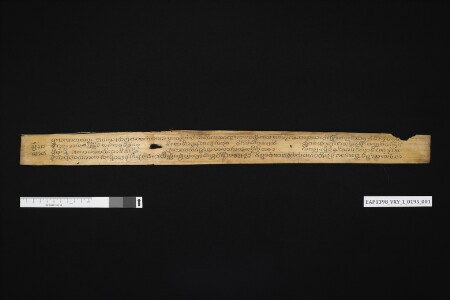

ອານິສົງການສ້າງສາລາ. ສະໄໝພຸດທະການ ໃນເມືອງໂກສໍາພີຍັງມີຊາຍທຸກໄຮ້ເຂັນໃຈຜູ້ໜຶ່ງ ໄດ້ປະກອບອາຊີບຂາຍຫຍ້າແລະຂາຍໃບຕອງ. ວັນໜຶ່ງ ຊາຍຜູ້ນັ້ນ ກໍ່ໄດ້ເຂົ້າໄປໃນປ່າ ເພື່ອຈະເອົາໃບຕອງແລະຫຍ້າ ໄດ້ໄປເຫັນສາລາຫຼັງໜຶ່ງທີ່ຕັ້ງຢູ່ແຄມທາງ ຈຶ່ງຄິດວ່າ ທີ່ຕົນທຸກຍາກ ກໍ່ຍ້ອນວ່າບໍ່ໄດ້ເຮັດບຸນໃຫ້ທານ ບໍ່ໄດ້ຮັກສາສີນ ຟັງທໍາ ເມື່ອຄິດໄດ້ແນວນັ້ນແລ້ວ ຈຶ່ງກັບໄປເຮືອນແລ້ວຊັກຊວນພັນລະຍາສ້າງສາລາ. ສ່ວນພັນລະຍາກໍ່ເຫັນດີ ແຕ່ບໍ່ມີເງິນ ຈຶ່ງໄດ້ເອົາລູກຊາຍໄປຂາຍໃຫ້ເສດຖີໄດ້ເງິນ ໕໐໐ ກະຫະປັນນະແລ້ວມາສ້າງສາລາ ແລະຂຸດບໍ່ນໍ້າ ເມື່ອສ້າງສໍາເລັດແລ້ວ ຈຶ່ງຖວາຍໃຫ້ເປັນທານແກ່ພິກຂຸ. ດ້ວຍຜະລະອານິສົງດັ່ງກ່າວ ຄັ້ນເມື່ອຊາຍຜູ້ນັ້ນພ້ອມດ້ວຍພັນລະຍາແລະລູກຊາຍໄດ້ຈຸຕິຕາຍໄປແລ້ວກໍ່ໄດ້ໄປເກີດເປັນເທວະບຸດສະເຫວີຍທິບພະສົມບັດຢູ່ເທິງສະຫວັນ ອັນມີວິມານຄໍາ ສູງໄດ້ ໑໒ ໂຫຍດ ແລະແວດລ້ອມດ້ວຍນາງຟ້າເປັນບໍລິວານ. ຄໍາລົງທ້າຍ: ລານທີ ໕ ໜ້າ ໒: ຣິດຈະນາແລ້ວຍາມທ່ຽງວັນ ໝາຍມີ ສັງຄະຊາ ຍັດສະນະປັນຍາ ວັດປາກຄານ ສ້າງແລ ສ້າງແລ.
The rewards derived from the construction of pavilions. In the Buddha’s time, there was a poor man lived in Kosambi. He earned with selling grass and banana leaves. One day, the man entered into the forest for collecting grass and banana leaves, he found a pavilion along the raod. Thinking that he is poor because of not making merit, not observing the precepts and listening to the Dhamma. When he thought that, he went back to his house and persuaded his wife to build a pavilion. His wife agreed with, but they did not have money. Therefore, they sold their son to a rich man for 500 Kahapana. They used to the money to build a pavilion and a well. They then donated the pavilion and well to the monks. Due to the results of the merit, after the death, the poor man, his wife and their son were born in the heaven with a gold heavenly castle with twelf yojana height and he was surrouned by angels as their servants. Colophon: Folio 5 on the verso side: The writing was accomplished at the time of thiang van (between 10.30–12.00 o’clock). Sangkhasa Yatsapannya from Vat Pak Khan is the sponsor.
Extent: 1 palm-leaf manuscript containing 7 leaves.
Size and dimensions of original material: Hight 5.2 cm, width 54.2 cm, depth 0.3 cm.
Condition of original material: Fragile.
Author(s)/Creator(s): Unidentified.
Scribe(s): Unidentified.
Original institution reference: Manuscript Cabinet No.01.