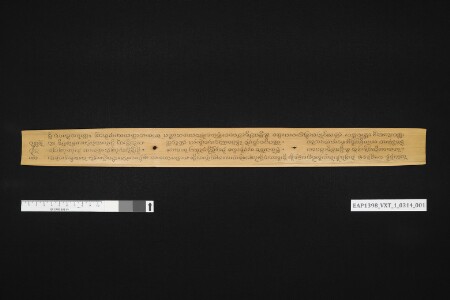
ຜູກທີ່ ໖ ກ່າວເຖິງ ພະພຸດທະອົງເດີນທາງໄປກັບເຮືອພໍ່ຄ້າ ໔ ຄົນ ໄປພັກແຮມທີ່ບ້ານສຸດທາວາດ ຊາວບ້ານໄດ້ຕ້ອນຮັບພະພຸດທະອົງ. ຈາກນັ້ນ ພະພຸດທະອົງໄດ້ປະທັບຮອຍພະພຸດທະບາດໃສ່ເທິງຜ້າຂາວຜືນໜຶ່ງ ເພື່ອໄວ້ເປັນທີ່ໄຫວ້ສັກກາລະບູຊາແກ່ຄົນແລະເທວະດາທັງຫລາຍ. ຄໍາລົງທ້າຍ: ລານທີ ໒໖ ໜ້າ ໑: ຈຸນລະສັງກາດຣາຊະໄດ້ ໑໒໓໒ ຕົວ ປີກົດສະງ້າ ເດືອນ ໑໒ ຂຶ້ນ ໒ ຄໍ່າ ວັນ ໔ ມື້ຮັບມົດ ຣິດຈະນາແລ້ວຍາມທ່ຽງວັນ ໝາຍມີ ທ້າວມ້າວແລຜົວເມຍ ພັນທຸວົງສາ ມີໃຈໃສສັດທາເປັນອັນຍິ່ງ ຈຶ່ງໄດ້ສ້າງຍັງ ເກສາທາດ ໄວ້ກັບວໍຣະພະພຸດທະສາສະໜາ ພະພຸດທະເຈົ້າ ຕາບຕໍ່ເທົ້າ ໕໐໐໐ ພະວັດສາ ນິບພານະ ປັດຈະໂຍ ໂຫຕຸ ໂນ ນິດຈັງ ນິດຈັງ ປະຣະມັງ ສຸກຂັງ.
This sixth fascicle tells the Buddha journeyed on a boat of four merchants and stayed at the village of Sutthavat. There, villagers came to welcome the Buddha. Then the Buddha stamped his footprint on a white cloth for the people to worship. Colophon: Folio 26 on the recto side: Chunlasangkat (CS) 1232, a kot sanga year, on the second day of the waxing moon of the twelfth lunar month, the fourth day of the week (Wednesday), a hap mot day, the writing was accomplished at the time of thiang van (between 10.30–12.00 o’clock). Thao (Mr) Mao and his wife together with all their relatives had the ardent religious faith to sponsor the making of this manuscript entitled Kesa That (Hair Relics of the Buddha) to support the Teaching of the Buddha to last until the end of 5000 years. Nibbāna paccayo hotu no niccaṃ niccaṃ paramaṃ sukhaṃ (May this be a condition for us to reach Nirvana, constantly, the greatest bliss).
Extent: 1 palm-leaf manuscript containing 27 leaves.
Size and dimensions of original material: Hight 4.8 cm, width 54.2 cm, depth 1 cm.
Condition of original material: Fragile.
Alternative calendar and date: Lao, CS 1232, a kot sanga year
Author(s)/Creator(s): Unidentified.
Scribe(s): Unidentified.
Original institution reference: Manuscript Cabinet No.01.