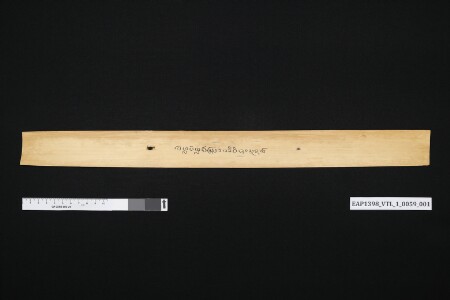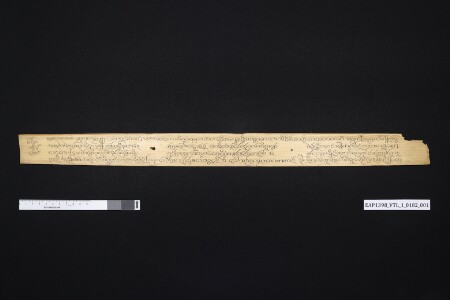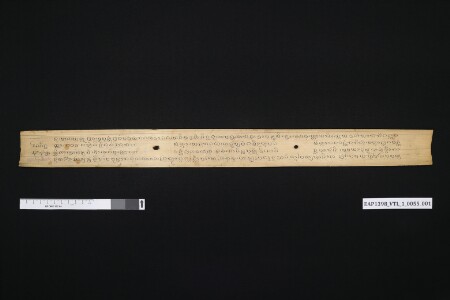

ພຸດທະມັນຕາ ຫຼືພຸດທະມົນ ເປັນບົດສູດມົນພາສາບາລີ ພະສົງແລະຊາວພຸດທະໃຊ້ສູດເພື່ອຄວາມເປັນສິຣິມຸງຄຸນ ແລະປົກປ້ອງຄຸ້ມຄອງໄພແລະອັນຕະລາຍທັງປວງ. ບົດສູດນີ້ ເລີ່ມຕົ້ນດ້ວຍ ສັມພຸດທັງ ມາຣະຊິຕວາ ນະ ທັມມັງ ຈິຕຕັປປະສາທະນັງ ແລະຈົບດ້ວຍ ສັບພາ ໂຊເຕຕຸ ສະກະຣັງ ສິຍາຕິ ພຸດທະມັນຕັງ ນິຕຖິຕັງ. ຄໍາລົງທ້າຍ: ລານທີ່ ໒໒ ໜ້າ ໑: ຈຸນລະສັງກາດຣາຊະໄດ້ ຮ້ອຍທັດ (໑໒໐໐) ປີເປິກເສັດ ເດືອນ ໑໒ ຂື້ນ ໑໐ ວັນ ໑ ມື້ກັດເຮົ້າ ຣິດຈະນາແລ້ວຍາມກອງງາຍ ໝາຍມີ ນາງເພັຍທ້າວ ກັບທັງບຸດຕະນັດຕາ ພ້ອມກັນມີໃຈໃສສັດທາສ້າງ ພຸດທະມັນຕະ ໄວ້ກັບສາສະໜາ ຕາບຕໍ່ເທົ້າ ໕ ພັນວັດສາ ນິບພານະ ປັດຈະໂຍ ໂຫຕຸ ໂນ.
Buddhamantra is the prayer written in Pali is used by monks and Buddhists for chanting in order to be for auspiciouness and to protect from all dangers. The chant starts with Sambuddhaṃ mārajitva na dhammaṃ cittappasadhānaṃ, and ends with Sabba jotetu sakaraṃ siyāti buddhamantaṃ nitthitaṃ. Colophon: Folio 22 on the recto side: Chunlasangkatrasa one hundred (corresponding with CS 1100), a poek set year, the tenth day of the waxing moon of the twelfth lunar month, the first day of the week (Sunday), a kat hao day, the writing was accomplished at the time of kòng ngai (between 7.30–9.00 o’clock). Nang Phia Thao together with all her children had the religious faith to sponsor the making of the manuscripts entitled Phutthamanta (Buddha mantra) to support the Teachings of the Buddha to last until the end of 5000 years. May this be a condition for us to reach Nibbāna certainly.
Extent: 1 palm-leaf manuscript containing 22 leaves.
Size and dimensions of original material: Hight 4.5 cm, width 56.5 cm, depth 0.8 cm.
Condition of original material: Good.
Alternative calendar and date: Lao, CS 1200, a poek set year
Author(s)/Creator(s): Unidentified.
Scribe(s): Unidentified.
Original institution reference: Manuscript Cabinet No.4.