Aims and objectives
The University of the West Indies (UWI), Mona Herbarium, Jamaica, holds over 37,000 plant specimens dating from the 1880s to the present. This project aims to digitise 1,000 historical specimens from the 1880s to 1950s, improving access for research, education and public engagement. Early collections by G F Asprey and R G Robbins supported the 1953 monograph The Vegetation of Jamaica, enhancing understanding of the island’s ecosystems. Subsequent works, including Charles D Adams’ Flowering Plants of Jamaica (1972) and George Proctor’s Ferns of Jamaica (1985), also relied on herbarium specimens. Contributions from botanists like William Harris, J H Simpson and E B Bartram showcase Jamaica’s endemic flora and species from the Greater and Lesser Antilles. By digitally preserving collections and managing biodiversity data, the Herbarium supports conservation and restoration, while providing valuable knowledge for future generations.
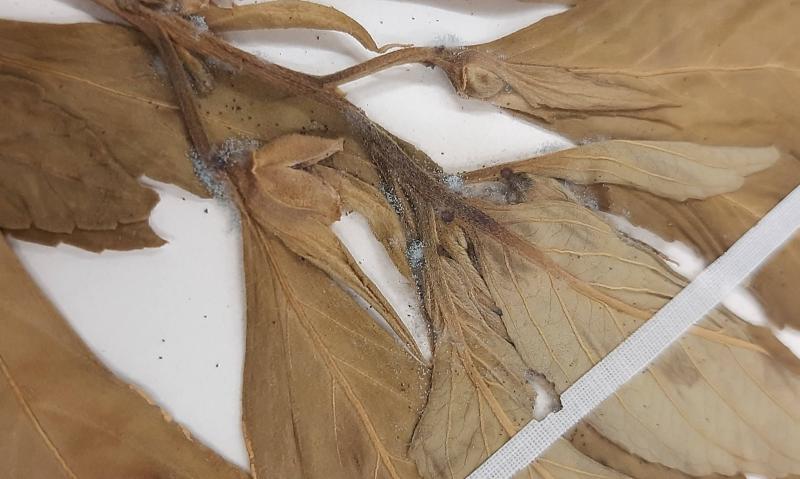
The UWI Mona Herbarium's collection includes specimens not collected in the wild over the last 50 years and are unduplicated elsewhere. Housed in two rooms (total area: 624ft²) without air conditioning, the high temperature and humidity levels (28°C and 77.24%) promotes rapid growth mould and insect pests. According to standard guidelines, herbaria should maintain a temperature of 20–23°C and humidity between 40–60% (Bridson and Forman, 1992), meaning the collection is at risk if these conditions are not upheld. Our inventory recorded 1,945 out of the 37,000 plant specimens with 16.9% showing signs of pest infestation, categorised as low (13.3%), medium (2%) and high (1.2%) risk, particularly affecting leaves, flowers and fruit. Humidity also damages paper, erasing ink on specimen labels.