
Aims and objectives
The aim of this project, Archives of Kurdistan: Recovering Endangered Public Records of Sulaymaniyah and Surrounding Regions in Iraq was to undertake the surveying: The cleaning, separation and categorization and safeguarding of 100 boxes and sacks of Kurdistan’s endangered and perishing national archives from a substantial collection kept in terrible condition in a neglected government office on the outskirts of the city of Slemani, Iraqi Kurdistan.
Our objective has been to preserve the crucial documents from deterioration and loss, to categorise and protect these critical national and socio-political documents and resources, and to make them accessible to local and international researchers, scholars, and the general public in the near future. At this early stage of the project, we have realised that there are many important documents and resources within the large collection that are in poor condition, having been eaten away by insects, and require attention.
Therefore, the long-term aim of this project is to clean, protect, and categorise as many of these crucial social and national resources as possible for the future. There are thousands of documents remaining to be worked on to make them accessible in the future.
Outcomes
At this initial stage of the project, our team has surveyed 100 boxes and sacks; however, no digitalisation has been carried out. Moreover, our working team has successfully relocated the entire collection to the Zheen Centre. From this large collection, we randomly selected 100 boxes and sacks for cleaning and surveying. The documents were first classified into two categories:
- Section A: Documents in acceptable conditions to survey, which by the end of the project equal more than 300 acid-free boxes (as the sacks were big and contained double the amount of the boxes).
- Section B: Documents unable to work on for survey (moulded and perished or in terrible condition).
The section A documents have undergone several cleaning sessions to disinfect and prepare them for classification.
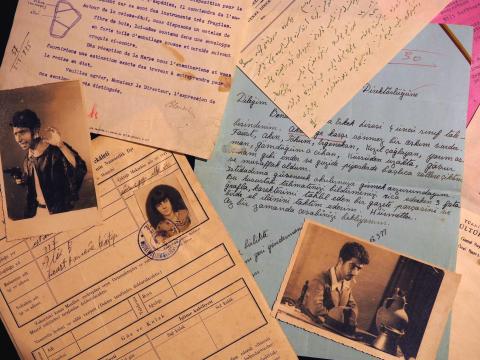
During the classification period, the documents have been divided into pre-1950 and post-1950 documents. Each of these sections has been divided into different categories and departments, and within those sections, other subsections are identified and filed separately in respective groupings in acid-free boxes. Each box includes a preliminary list of the files contained and their categories. Additionally, a sensitive and critical collection has been identified from both the pre- and post-1950s documents. These documents are saved and secured in labelled acid-free boxes under critical and sensitive files.
The entire archival collection, including the 100 boxes and sacks surveyed for this project, is now located at Zheen Archival and Research Centre, in Slemani. The previous legal owner of the collection, the Slemani Governorate, transferred full ownership of the collection to the Zheen Centre through official, authorised documents in August 2024. The entire basement of the Zheen Centre is now dedicated to the archives, and the 100 surveyed documents are stored in nearly 300 acid-free boxes in a back room, isolated from the rest of the collection to protect them from contamination. These boxes are kept in the main halls of the basement.
At this stage, the documents are not accessible to anyone outside of the working team. In the next stage of the project, further work on the documents is needed to separate sensitive and special collections from the rest of the papers and to digitise these collections, making them accessible to both local and international users.