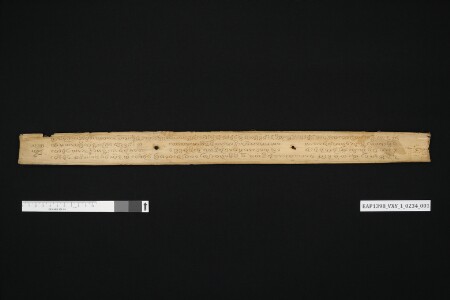

ສອງຢົດຢາ ໝາຍເຖິງອານິສົງທີ່ເກີດຈາການສ້ອມແຊມກຸຕິວິຫານຫຼືສາສະນະສະຖານຕ່າງໆ. ໃນສະໄໝພະກັດສະປະພຸດທະເຈົ້າ ພະອົງຊົງດໍາລົງພະຊົນມະຊີບຢູ່ນານເຖິງສອງໝື່ນປີ ຈຶ່ງດັບຂັນເຂົ້າສູ່ປະຣິນິບພານ. ເມື່ອສາສະໜາຂອງພະອົງສ້ຽງສຸດໄປແລ້ວ ຍັງເຫຼືອແຕ່ພະພຸດທະຮູບ, ເຈດີ, ຕົ້ນສີມະຫາໂພ ແລະກຸຕິວິຫານທີ່ເກົ່າຄໍາຄ່າຊະຣາຫາຜູ້ຈັກອຸປະຖາກຮັກສາ ສັກກາລະບູຊາບໍ່ໄດ້. ໃນກາລະເມື່ອນັ້ນຍັງມີເສດຖີຜູ້ໜຶ່ງ ໄດ້ມາເຫັນພະທາດເຈດີ, ຕົ້ນສີມະຫາໂພ, ພະພຸດທະຮູບ ແລະກຸຕິວິຫານວັດວາອາຮາມອັນໂປດເປ່ເພພັງດັ່ງນັ້ນ ກໍ່ມີໃຈໃສສັດທາ ຄຶດຫາຄຸນແກ້ວສາມປະການ ກໍ່ໄດ້ກະທໍາຊໍາລະສະສາງແປງໃຫ້ດີທຸກຢ່າງແລ້ວ ກໍ່ກະທໍາເຄົາລົບຢໍາແຢງສັກກະລາບູຊາທຸກວັນ. ດ້ວຍອານິສົງທີ່ໄດ້ກະທໍານັ້ນ ເມື່ອເຂົາຕາຍໄປ ກໍ່ໄດ້ໄປເກີດໃນສະຫວັນ ສະເຫວີຍທິບພະສົມບັດ. ເມື່ອໝົດອາຍຸໄຂໃນສະຫວັນແລ້ວ ກໍ່ຈະໄດ້ມາເກີດເປັນພະເຈົ້າຈັກກະພັດເປັນເວລາຫຼາຍຊາດ. ຄໍາລົງທ້າຍ: ລານທີ ໗ ໜ້າ ໑: ເດືອນ ໔ ລົງ ໕ ຄໍ່າ ວັນ ໓ ປີຮວາຍຍີ່ ສັງກາດ ໑໒໘໘ ຕົວ ໝາຍມີ ທິດຍາ ໄດ້ສ້າງໜັງສືໄດ້ຂຽນໜັງສື ສອງຢົດຢາ ຜູກນີ້ ໄວ້ກັບສາສະໜາ ຂໍໃຫ້ຜູ້ຂ້າໄດ້ເຂົ້າສູ່ນີພານກໍ່ຂ້າເທີ້ນ.
Sòng nyotnya means the merit gained by renovating and restoring the monks’ abode and other monastic buildings. In the time of Kassapa Buddha, he had been alive for two thousand years and then passed away. After the end of the Teachings of Kassapa Buddha, there remained Buddha images, stupas, Bodhi tree, and monks’ abode which were old and decayed and no body supported, preserved, worshipped. At the time, there was a rich man who was faithful in the Triple Gem saw the stupas, Bodhi tree, Buddha images, and abodes being declined. He renovated all the buildings and images and then regularly paid homage and worshipped. Due to the results of the good deed, after death, he was reborn in a heaven and enjoys the heavenly property. After the heaven, he will reborn in the world and become an emperor for many existences. Colophon: Folio 7 on the recto side: On the fifth day of the waning moon of the fourth lunar month, the third day of the week (Tuesday), in a hwai nyi year, Sangkat (CS) 1288. Thit Nya sponsored the making of this manuscript entitled Sòng Yotya to support the Teachings of the Buddha. May I enter into Nirvana, definitely.
Extent: 1 palm-leaf manuscript containing 8 leaves.
Size and dimensions of original material: Hight 5.8 cm, width 58.7 cm, depth 0.4 cm.
Condition of original material: Fragile.
Alternative calendar and date: Lao, CS 1288, a hwai nyi year
Author(s)/Creator(s): Unidentified.
Scribe(s): Unidentified.
Original institution reference: Manuscript Cabinet No.1.