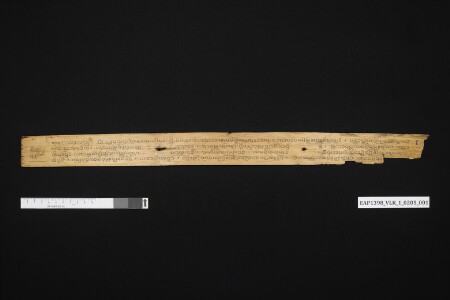
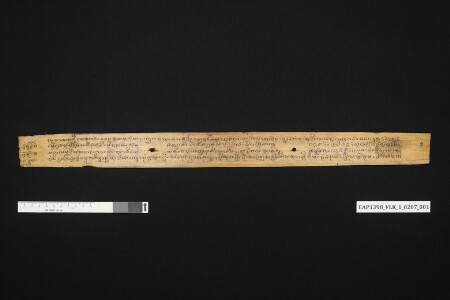
ສອງຂົວ ໝາຍເຖິງ ບຸນທີ່ເກີດຈາກການສ້າງຂົວໃຫ້ແກ່ພະພິກຂຸສົງແລະສາທາລະນະ. ໃນສະໄໝໜຶ່ງ ມີຊາຍຜູ້ໜຶ່ງຢູ່ເມືອງກະບິນລະພັດ ລ້ຽງຊີບດ້ວຍຄວາມສຸຈະລິດຊອບທໍາ ໃນເຊົ້າມື້ໜຶ່ງ ຊາຍຜູ້ນັ້ນໄດ້ລຸກແຕ່ເຊົ້າແລ້ວຍ່າງລົງໄປຫາທ່ານໍ້າ ບັງເອີ້ນໄປພົບພິກຂຸ ໔ ອົງກໍາເດີນບິນດະບາດ ແຕ່ຖະນົນຂາດ ພິກຂຸເຫລົ່ານັ້ນ ບໍ່ສາມາດຍ່າງຂ້າມໄດ້ ຊາຍຜູ້ນັ້ນຈຶ່ງຊອກໄມ້ ມາກ່າຍລຽນກັນເຮັດເປັນຂົວ ໃຫ້ພິກຂຸໄດ້ຍ່າງຂ້າໄປບິນດະບາດອີກຝັ່ງໜຶ່ງ ດ້ວຍຜາລະອານິສົງທີ່ໄດ້ແປງຂົວນ້ອຍນັ້ນ ຄັ້ນເມື່ອຈຸຕິຕາຍໄປກໍ່ໄດ້ໄປເກີດເປັນເທວະບຸດສະເຫວີຍທິບສົມບັດເທິງສະຫວັນ. ຄໍາລົງທ້າຍ: ລານທີ ໘ ໜ້າ ໑: ສັງກາດຣາຊະໄດ້ ໑໑໘໙ ຕົວ ປີເມິ່ງໃຄ້ ໝາຍມີ ຊຽງພົມມາ ມີໃຈໃສສັດທາສ້າງ ສັບພະສອງ ໄວ້ກັບສາສະໜາ ນິບພານະ ປັດຈະໂຍ ໂຫນຕຸ ໂນ.
The merit derived from making a bridge for monks and for public. At one time, there was a man who lived in Kapilavatthu earned with righteousness. One one morning the man went to a stream. On the way, he met by chance four monks being on their alms round. The way broken, the monks could not past through the way. The man put pieces of wood on the broken way as a bridge. So, the monks could past and continued their alms round. Due to the results of the merit from from making the bridge for the monks, after death the man was reborn as a devaputta in a heaven with divine properties. Colophon: Folio 8 on the recto side: Sangkat (CS) 1189, a moeng khai year. Xiang Phomma had the religious faith to sponsor the making of this manuscript [entitled] Sappha (Various rewards) to support the Teachings of the Buddha. Nibbāna paccayo hotu no (May this be a condition for us to reach Nibbāna).
Extent: 1 palm-leaf manuscript containing 9 leaves.
Size and dimensions of original material: Hight 4.7 cm, width 55.2 cm, depth 0.3 cm.
Condition of original material: Fragile.
Alternative calendar and date: Lao, CS 1189, a moeng khai year
Scribe(s): Unidentified.
Original institution reference: Manuscript Cabinet No.1.